

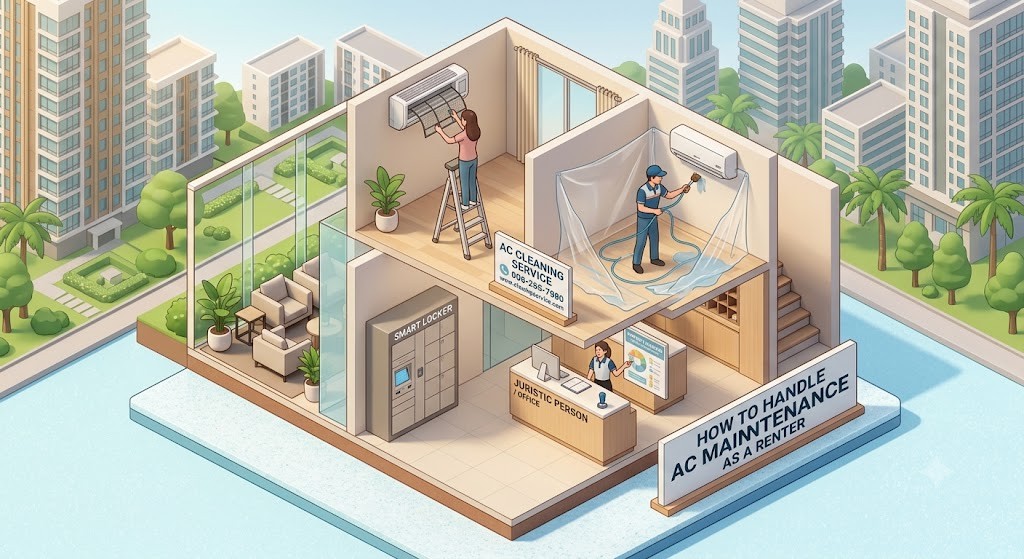
Living in Thailand means your air conditioner is easily one of the most important appliances in your home. It keeps you cool, filters out dust, and manages tropical humidity. However, many renters are unsure about who handles the upkeep: the tenant or the landlord?
To keep your home comfortable and avoid disputes, here is everything a renter needs to know about maintaining an air conditioning unit.
1. Monthly Maintenance: Cleaning the Filters (Tenant’s Role)
Cleaning the mesh filters inside your wall unit is a quick, easy DIY task that tenants are responsible for doing every 1 to 2 months.
• Why it matters: Clogged filters restrict airflow, making your AC work twice as hard. This drives up your monthly electricity bill and reduces cooling efficiency.
• How to do it: Simply switch off the power, pop open the front plastic casing of the unit, slide out the mesh filters, and rinse them under a bathroom tap. Let them air dry completely before sliding them back in.
2. Every 6 Months: Professional Deep Cleaning (Shared Dynamic)
Over time, dust, mold, and bacteria build up deep inside the cooling coils, fan wheels, and drainage pipes. This requires a professional technician to spray down the unit using specialized high-pressure water equipment and protective plastic sheeting.
• Who pays for it? Standard practice in Thailand dictates that the landlord provides a professionally cleaned AC unit upon move-in. Following that, the cost of regular 6-month servicing is typically the tenant’s responsibility as part of normal home upkeep, unless specified otherwise in your lease agreement.
• How to book: You can ask your real estate agent, landlord or check with your building’s Juristic Office. While the Juristic team won’t clean it themselves, they keep a trusted list of preferred, certified technicians who service your specific building regularly.
3. Troubleshooting Common AC Issues
If your air conditioner stops working properly, run through this quick checklist before calling for emergency help:
• Water Leaking from the Unit: If water is dripping down your wall, the internal condensation drainage pipe is likely blocked by dust or jelly-like buildup. A standard professional deep clean will clear this line instantly.
• The Air Isn’t Cold: Check your remote-control settings first. Ensure the mode is set to “Cool” (usually a snowflake icon) and the fan speed is active. If it is on “Dry” or “Fan Only,” the compressor outside will not engage, and the room won’t cool down.
• Strange Noises or Bad Smells: A musty smell points to mold accumulation, which requires a deep clean. A loud rattling or buzzing sound from the unit or the outside compressor compressor should be reported immediately, as it indicates a mechanical issue.
4. What to Do If the AC Breaks Completely?
If a technician reports that the air conditioner has a major mechanical failure (such as a broken compressor, a burnt-out circuit board, or an internal refrigerant leak), the protocol changes:
1. Do not authorize expensive repairs yourself.
2. Take a video of the issue and gather the technician’s official diagnosis report.
3. Contact your real estate agent or landlord immediately. Major mechanical failures and appliance replacements due to normal wear and tear are legally the landlord’s financial responsibility.
💡 Pro-Tip for Renters: Always save the receipts and dates of your professional AC cleanings. If a dispute ever arises regarding the appliance’s condition, having a paper trail proves that you took excellent care of the property during your tenancy!